The first time I heard the word longevity used the way it gets used today, someone on a stage promised the room a number. A hundred and twenty, achievable, if you followed the right protocol closely enough. I remember writing it down, not the protocol, just the number, underlined twice, as though it were the whole point.
For a while, I thought it was.
I used to think longevity was a number. So did most of the people around me, quietly assuming that living well simply meant living longer, and that the two were the same project. They are not the same project. It took me years, and a fair amount of wasted money, to understand that.
Then the biohackers arrived, one strange new method after another, and everyone started scrambling to keep up. Supplements nobody had tested for more than a few years, stacked in combinations nobody had tested at all. Protocols built on theories still being argued over, sold with the confidence of settled fact. Half of it was educated guessing. The other half was wishful thinking wearing a lab coat.
Say the word longevity to almost anyone today, and watch where their mind goes. Supplements, most likely. Some device tracking a number while you sleep. A protocol with a name that sounds vaguely clinical, borrowed from a podcast they half remember. The assumption arrives so automatically it barely feels like an assumption at all: that none of this is possible without buying something first, that the body simply won’t cooperate unless you intervene on it, constantly, expensively. That’s not a fact. That’s a sales pitch that worked so well it stopped sounding like one.
I believed it too, for a while. The years were the goal. More of them, at almost any cost. It took me longer than I’d like to admit to ask the obvious question: more years doing what, exactly?
Here is the distinction nobody hands you at the start, though it should be the very first thing anyone explains. Lifespan is how long you live. Healthspan is how long you live without losing the ability to live the way you actually want to; without disability, without dependency, without your days shrinking down to what your body will still allow. They are not the same number. A long lifespan with a short healthspan means years spent managed rather than lived, decline arriving early and just stretching out longer. Nobody puts that version on a supplement label.
The confusion is not an accident. Fear sells better than function. A pill promising more years taps something primal; a boring truth about grip strength and stair climbing does not. So the industry keeps selling duration, dressed up in healthspan’s vocabulary, because duration is the easier story and the more profitable one. Ask what any given protocol is actually optimizing for, and more often than not the honest answer is years on a certificate, not years spent gardening, or dancing at a wedding, or getting up off the floor without needing a hand.
What actually predicts healthspan turns out to be almost embarrassingly unglamorous. Muscle, kept through ordinary use rather than punishing training. Balance, practiced the boring way, over and over, nothing to post about. People you see often enough that isolation never gets the chance to set in. Sleep that isn’t tracked, just protected. None of it works unless you keep doing it, quietly, for decades, which is exactly the part the industry has no interest in selling you, because there’s nothing left to buy after the first year.
So here’s the one to ask yourself: if you had to choose, right now, between ten extra years or ten more years of being able to get up off the floor on your own, which would you actually pick?
Most people say the second one, the moment they hear it stated plainly. Almost nobody is living like they believe it.
We buy the supplement instead of taking the walk. We track the sleep score instead of turning off the light. We chase the number because the number is measurable, and measurable feels like progress, even when it’s pointed at the wrong target entirely. The stair climbing and the grip strength and the friend you actually called back this week don’t show up on any panel a doctor can order. They don’t come with a score. They just quietly decide, years from now, whether you’re the one still getting up off the floor on your own.
Nobody sells you that version.
There’s no bottle for it.
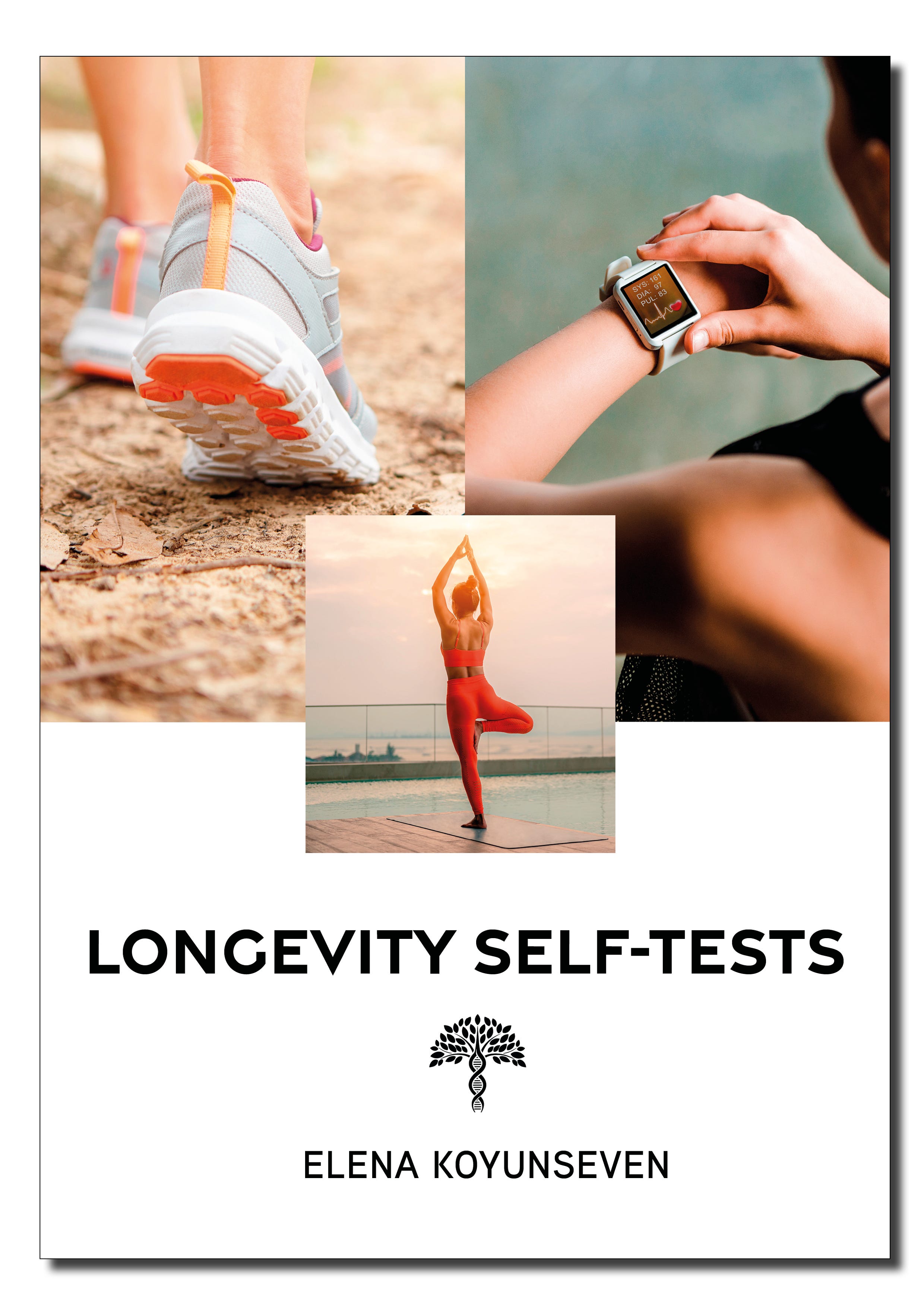
If the idea that longevity doesn't require a device stuck with you, the Longevity Self-Tests guide proves the point directly: four simple markers, balance, pulse, walking speed, and grip strength, each one predicting more about how well you're aging than any wearable could. No equipment required. A digital guide, instant download.